
[ About ]
Aironomics 2025
Aironomics 2025
Unlocking India's Blue Skies Economy
Air pollution is a persistent, year-round concern that poses a dual threat to both public health and the economy in India. While pollution peaks in the winter, poor air quality lingers through the year, impacting millions across urban and rural India alike. But behind this challenge lies a powerful opportunity. Tackling air pollution can unlock transformative economic and environmental gains—creating new green jobs, driving investment in clean technologies, and delivering co-benefits for public health, climate action, and nature. From electric mobility and clean energy to waste valorization and regenerative agriculture, solutions to clean India’s air overlap with some of the fastest-growing sectors in the country. The path to blue skies is also a pathway to shared prosperity and sustainable growth.
Unlocking India’s potential to address air pollution and climate change demands collaboration across public, private, and philanthropic sectors—each playing a distinct role. Governments provide policy direction and funding; the private sector drives innovation and infrastructure; philanthropy bridges gaps through funding, research, and community engagement. Civil society plays a vital role in driving behavior change and ensuring solutions reach the most vulnerable.

Health and economic impact of air pollution on India
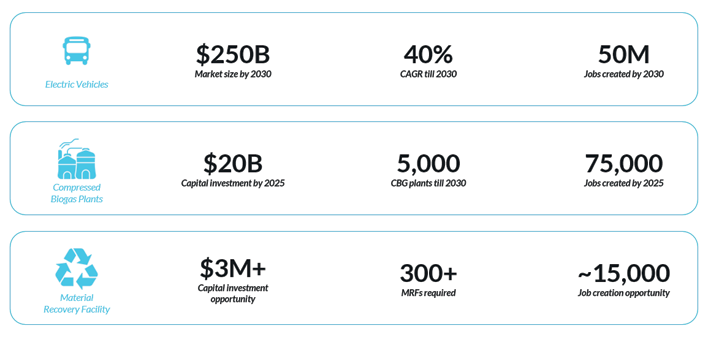
Economic opportunity of air pollution in India across high-growth sectors
Aironomics 2025 – Unlocking India’s Blue Skies Economy will convene high-level stakeholders to shape coordinated strategies for tackling air pollution and climate change. The summit will serve as a platform for government leaders, private sector players, philanthropies, academicians, multilateral and bilateral organizations, and financial institutions to catalyze investment, streamline regulation, and accelerate the large-scale deployment of clean air solutions. By bringing together knowledge partners, academia, and industry experts, the summit aims to inform strategic discussions and drive actionable policy recommendations.
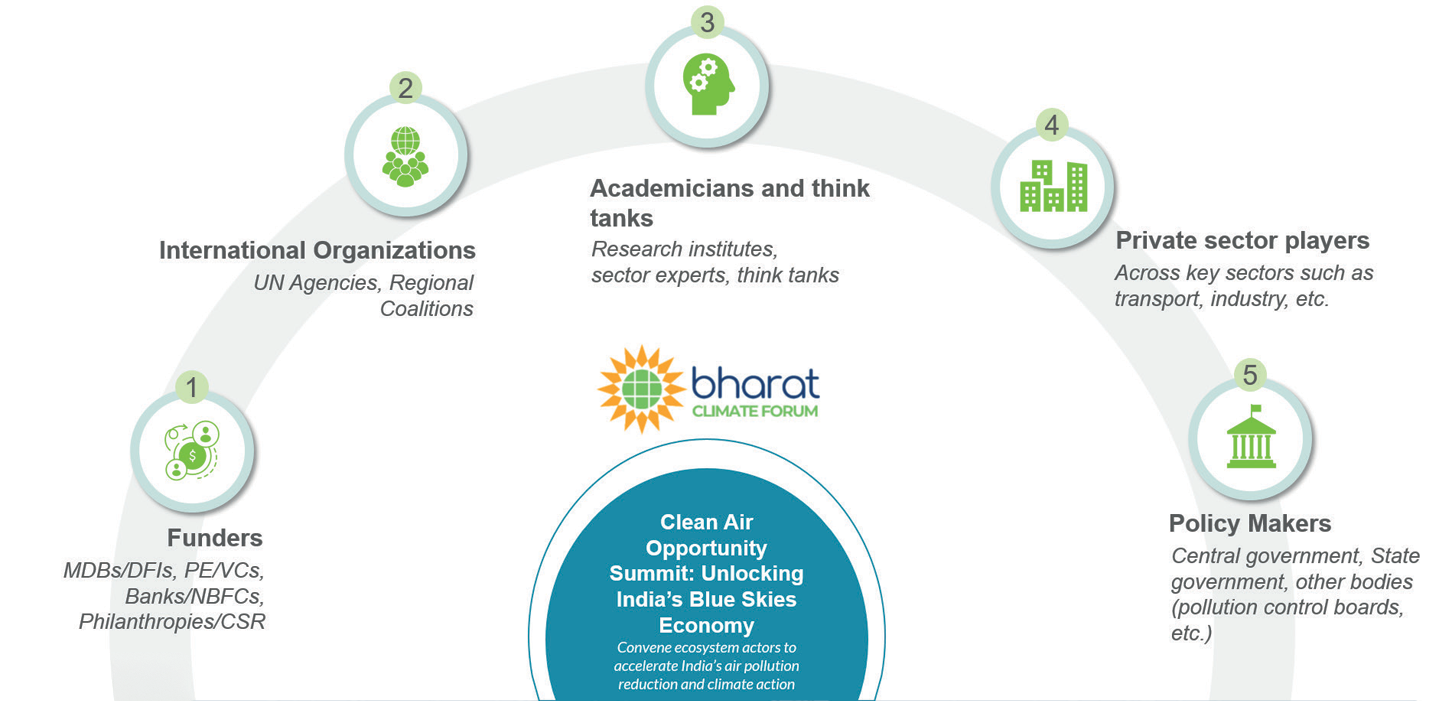
An illustrative list of participant archetypes who will be a part of the summit
Read MoreTheme
The proposed
summit is strategically valuable for politically positioning India as a global leader in
climate action. With strong political alignment between key Indo-Gangetic Plain states
(Uttar Pradesh, Haryana, Delhi) and the central government on addressing air pollution,
this platform will enhance India’s credibility in driving national and regional
solutions. Furthermore, it offers India an opportunity to demonstrate its commitment to
air pollution reduction and sustainable development, solidifying the country’s role as a
global leader in environmental action especially as the potential host of COP 33 (UN
Climate Conference 2028).
The summit is structured to ground participants in a shared understanding of the air
pollution challenge, including its drivers and impacts. It will also facilitate focused
discussions on sectoral opportunities for change, followed by a deep dive into the key
enablers— governance, financing, citizen action, and technology—that can drive scalable
and sustained impact.
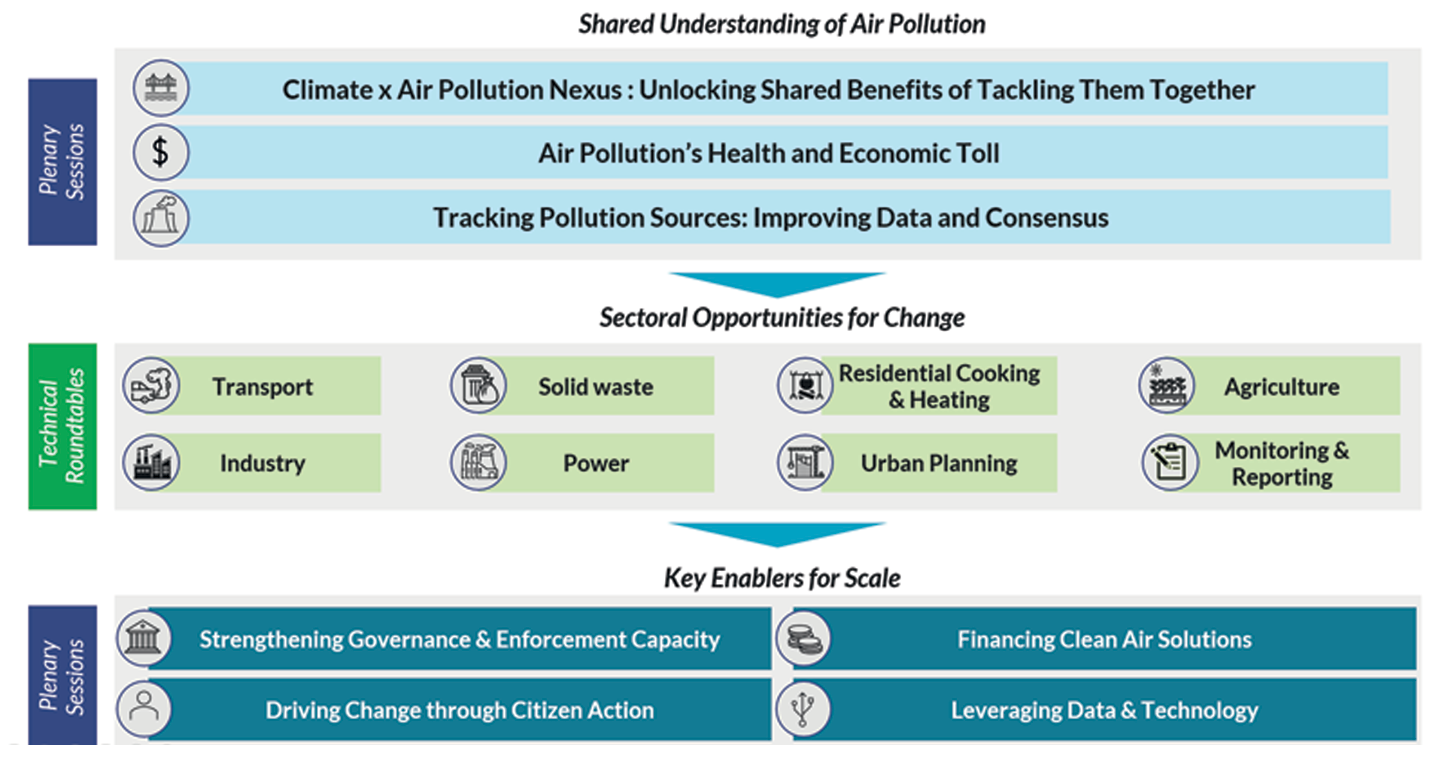
Key summit themes which will be facilitated through plenary sessions and technical roundtables
Download Agenda
.jpg)
.png)
.png)
Organisers
Aironomics 2025
Unlocking India’s Blue Skies Economy
08:00 – 09:00
Registration
09:00 – 09:20
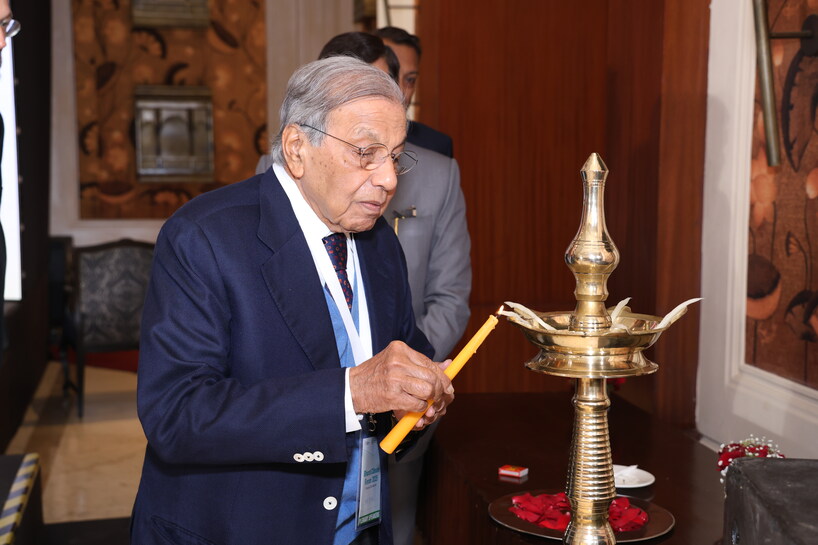
Welcome Address and Lighting the Lamp
1. A Breath of Fresh Ambition: Aligning Clean Air, Climate Action, and Shared Prosperity
Set the tone for Aironomics 2025—a flagship convening designed to unite political, institutional, and corporate leadership in India’s fight against air pollution. Illustrate the interlinkages between air pollution, climate, and development through shared solutions, and highlight economic, health, and equity co-benefits and identify integration as a priority for cross-sectoral action and investment.
Welcome Address:
Dr. Ashwani Mahajan, Member, Board of Governors, Council For International Economic Understanding (CIEU)
Inaugural Address:
Shri Gopal Arya, National Convenor of RSS Paryavaran Vibhag
09:20 – 09:30
Setting the Stage
2. The Moment, the Mandate: Framing India’s Clean Air Opportunity
Frame the convening as a platform to unlock clean air as both an economic and cross-sectoral opportunity—spanning climate, health, and nature. Set the agenda for scaling high-impact solutions that deliver transformative outcomes across systems and regions.
Jagjeet Singh Sareen, Area Chair, Climate Initiatives, CIEU; Partner, Dalberg Advisors
09:30 – 10:00
Firestarter
3. Green Growth and Livable Cities
Reinforce air pollution as a persistent, year-round crisis with severe health impacts and disproportionate effects on vulnerable populations. Highlight its wide-ranging economic, reputational, and productivity costs—including missed opportunities for investment and growth.
Soumya Swaminathan, Chairperson, M S Swaminathan Research Foundation (MSSRF)
Seema Arora, Deputy Director General, CII
Mikiko Tanaka, Director and Head of the UN ESCAP Subregional Office for South and
South-West Asia (moderator)
10:00 – 10:15
Featured Speech
4. Blue Skies in Viksit Bharat
Explore reforms required to strengthen inter-agency coordination and embed accountability across jurisdictions. Address how public policy and administrative mechanisms can be realigned to move towards sustained, year-round clean air governance
Mr. Arun Duggal, Chairman and Independent Director, ICRA Limited
10:15 - 11:00
Immersive Discussion
5. Finding Facts: Cracking the Code on Pollution Sources
Highlight the diverse and cross-geographic sources of air pollution, spanning sectors like transport, industry, and agriculture. Address the lack of robust source apportionment studies, the uncertainty it creates, and showcase global best practices for policy-relevant attribution.
Panel Members:
Sachchida Nand Tripathi, Professor, IIT Kanpur
Sumit Sharma, Program Officer, UNEP
Anju Goel, Associate Director, TERI
R Subramanian, Sector Head Air Quality, CSTEP
Dr. Sachin S Gunthe, Professor, IIT Madras (moderator)
11:00 – 11:30
Firestarter
6. Powering the Air Quality Action Forum (AQAF)
Showcase how cross-sector leadership, corporate commitment, and multilateral partnerships can come together through AQAF to drive scalable solutions, unlock financing, and institutionalize clean air action across India.
Panel Members:
Dr. Balakrishna Pisupati, Head, UNEP India
Vijay Shekhar Sharma, CEO, Paytm
Atul Bagai, Former Country Head (India), UNEP (moderator)
11:30 – 11:45
From Policy to Possibility: Building India’s Ecosystem for Clean Air Solutions
7. Keynote Address
Highlight how India’s financial institutions, particularly public sector banks, are stepping up to finance the transition to cleaner technologies that address both climate and air pollution. Explore how banks can enable access to capital for solutions such as electric mobility, industrial pollution control, and green technology adoption among MSMEs.
Ashwini Tewari, MD and Board Member, SBI
11:45 – 12:20
Opportunity Showcase
8.A Clean Air + Green Gains: Synergizing India’s Blue Sky – Green Growth Economy
Showcase scalable, market-ready clean air solutions across key sectors including transport, solid waste, residential heating, and agriculture. Highlight innovations like EV fleets, biogas plants, clean cookstoves, and biochar, with potential for carbon and plastic credit-linked financing.
Transport: Hanif Qureshi, Additional Secretary, MHI (Ministry of Heavy Industries)
Solid Waste: Annupa Mattu Ahi, TOMRA
Residential cooking and heating: Ankit Mathur, Co-founder and CEO, Greenway Grameen
Infra
Agriculture: Swapan Mehra, Founder and CEO, Iora Ecological Solutions
12:20 – 12:45
Opportunity Showcase
8.B From Legacy to Leadership: Retooling India’s Core Sectors for Clean Air
Highlight critical system upgrades across urban planning, and monitoring to reduce air pollution at scale. Emphasize solutions like dust control measures and data-driven tools for real-time tracking and accountability.
Urban Planning: Sree Kumar Kumaraswamy, Program Director – Clean Air Action,
Sustainable Cities & Transport, WRI India
Monitoring: R Subramanian, Sector Head Air Quality, CSTEP
12:45 – 13:00
Blueprint in Action: Clean Air Model from Uttar Pradesh
9. Keynote Address
Highlight Uttar Pradesh’s approach, including its urban air quality action plans, brick kiln reforms, and push for electrification in transport and industry.
Manoj Singh, Retired Additional Chief Secretary, Environment and Climate Change, Uttar Pradesh
13:00 – 13:45
Lunch
13:45 – 14:00
10. From the Ground Up: A Public Mandate for Clean Air
Keynote Address
Highlight the role of political will in delivering clean air outcomes, and how grassroots leadership, citizen engagement, infrastructure upgrades, and responsive governance can together chart a path to healthier, more resilient cities.
Manoj Tiwari, Member of Parliament – Delhi (North-East)
14:00 – 15:00
Keynote + Immersive Discussion
11. One Air, Many Bosses: Building Institutions for Integrated Climate and Clean Air Action
Reflect on the goals, achievements, and evolving priorities of the National Clean Air Programme. Examine governance and institutional models that enable coordinated, multisectoral action across air quality, climate, and development. Highlight the roles of government, regulators, and judiciary in driving enforcement, alignment, and scalable airshed-based approaches.
Keynote Address:
Dr. Virinder Sharma, Member (Technical), Commission for Air Quality Management
Panel Members
Justice Adarsh Kumar Goel, Former Chairperson, National Green Tribunal (NGT) India
Arvind Nautiyal, Member Secretary, CAQM
Prashant Gargava, Former Member Secretary, Central Pollution Control Board (CPCB)
Sutapa Choudhury, Deputy Head, Indo Pacific Regional Department (IPRD)
Shirish Sinha, Executive Director of Programmes, Clean Air Fund (moderator)
15:00 – 15:30
Opportunity Showcase
12. Clearing the Air: Transforming Power and Industry
Highlights cutting-edge upgrades in India’s industrial and thermal power sectors to reduce air pollution at scale. It will spotlight cleaner production technologies and critical retrofits in thermal power plants, such as flue gas desulfurization (FGD) and advanced emission controls.
Industry: Sunil Desai, Co-Chairman, CII National Initiative: 'Cleaner Air - Better life'
Thermal Power Plants: Ujjwal Bhattacharya, Former Director (Projects & Technical), NTPC
Limited
15:30 – 16:30
Immersive Discussion
13. Turning the Tide: Delhi’s Moment to Lead on Clean Air
Reaffirm Delhi’s political will to lead on clean air while acknowledging the governance complexity across multiple jurisdictions. Emphasize the need for an airshed approach to tackle shared pollution sources and reflect on why past efforts have struggled to deliver lasting, regional impact
Panel Members
Manjinder Singh Sirsa, Minister of Food & Supplies, Industry, Forest & Environment, Delhi
Bhupinder Bhalla, Former Secretary, Ministry of New and Renewable Energy (MNRE)
Keshav Chandra, Chairperson & Member, New Delhi Municipal Council (NDMC)
Ashwani Kumar*, Commissioner, Municipal Corporation of Delhi
Sanjiv Kumar, Chairman, Delhi Pollution Control Committee
Ambuj Sagar, Deputy Director (Strategy & Planning), IIT Delhi (moderator)
16:30 – 16:45
Beyond the Borders: Advancing Airshed Action for Clean Skies
14. Keynote Address
Reinforce the case for embedding airshed management into national strategies—turning India’s regional air quality challenges into an opportunity for cooperative leadership and scalable, systems-level solutions.
Auguste Tano Kouamé, Country Director foAuguste Tano Kouamé,r India, World Bank
16:45 – 17:45
Immersive Discussion
15. AirGPT: Data & Technology at the Heart of Air Quality Management
Highlight the transformative role of emerging technologies—AI, geospatial tools, and digital platforms—in enabling smarter air quality monitoring, enforcement, and planning. Explore how product innovations, such as next-gen electric vehicles and cleaner industrial systems, help reduce emissions at source. Showcase innovations that enhance institutional capacity and explore pathways to scale tech-driven solutions across sectors and cities.
Panel Members
Rajan Handa, Managing Director, OK Play
Rai Mahimapat Ray, Senior Digital Specialist, South Asia Region, The World Bank
Ronak Sutaria, Founder & CEO, Respirer Living Sciences
Suwarn Pant, Head Product Planning, EV, Tata Motors
Nishant Idnani, Managing Director, Vaultus Green Funding (moderator)
17:45 – 18:00
Keynote Address
16. Cultivating Change: Punjab’s Path to Clean Air
Showcase Punjab’s approach, including its efforts to tackle stubble burning through in-situ and ex-situ solutions, district-level clean air action plans, and emerging initiatives in managing industrial and vehicular emissions.
Dr. Adarsh Pal Vig, Former Chairman, Punjab Pollution Control Board
18:00 – 18:45
Immersive Discussion
17. Clean Air Starts with Us: People-Led Pathways to Cleaner Air
Explore how citizen engagement and local leadership are driving sustained clean air outcomes across sectors. Highlight behavior change strategies and community-led initiatives that have scaled through trust, incentives, and enabling policy platforms.
Panel Members
Bharati Chaturvedi, Founder and Director, Chintan
Indrajit Chaudhuri, CEO and Country Director, PCI
Emani Kumar, Deputy Secretary-General of ICLEI and Executive Director, ICLEI South Asia
Rakesh Thukral, CEO APAC, Edelman (moderator)
18:45 – 19:00
Closing Remarks
18. One Air, One Agenda: The Power of Partnership for Clean Skies
Highlight the urgent need for whole-of-system collaboration to effectively address air pollution— an issue that transcends boundaries. Explore how multi-level and multi-sectoral partnerships— spanning UN bodies like UNESCAP, WHO, UNEP, and UNDP, alongside governments and the private sector—can drive unified, scalable clean air action.
Shombi Sharp, UN Resident Coordinator, India
19:00 – 19:45
Keynote + Immersive Discussion
19. Air Is Free, Cleaning It Isn’t: Making Clean Air Investable
Address the funding gaps and barriers limiting private capital flow into clean air solutions. Highlight innovative financing models like RBF and blended finance, along with success stories that demonstrate scalable public-private investment
Key Notes:
N K Singh, Chairman, 15th Finance Commission
Pannel Menbers
Ann Jeannette Glauber, Environment Manager, World Bank
Shirish Sinha, Executive Director of Programmes, Clean Air Fund
Satyendra Kumar, Director, NITI Aayog
Jagjeet Singh Sareen, Area Chair, Climate Initiatives, CIEU; Partner, Dalberg Advisors,
(moderator)
19:45 – 20:00
Continuing the Momentum
20. A New Air Agenda: Pathways for Scale and Systemic Impact
Reflect on key insights and priority solutions emerging from the convening, with a focus on actionable roadmaps for scale. Identify cross-cutting enablers and reinforce collective commitment to translate ambition into sustained, system-wide impact.
Ministerial Valedictory Address
Rekha Gupta, Chief Minister, Delhi
20:00 onwards
Welcome Dinner
13:00 – 13:45
Lunch
14:00 – 15:00
A.1 Roadblocks & Runways: Steering India's Mobility Toward Clean Air
Identify major sources of transport-related air pollution and highlight solutions like EV fleets, scrappage programs, and clean logistics. Unpack barriers to adoption and explore pathways to scale through procurement, policy incentives, and private capital.
Knowledge Partner:
ICCT, Amit Bhatt, Managing Director India
14:00 – 15:00
A.2 Rags to Riches: Turning Trash into Clean Air Opportunity
Examine the role of unmanaged waste and landfills in driving urban air pollution. Highlight scalable solutions like biogas plants and MRFs, while exploring policy, finance, and PPP models to overcome systemic barriers and accelerate adoption.
Knowledge Partner:
Chintan, Bharati Chaturvedi, Founder and Director
15:15 – 16:15
B.1 Fires We Can't See: Cleaning the Air in Indian Households
Understand how biomass and kerosene use contribute to residential air pollution, particularly in rural and peri-urban areas. Highlight clean cooking solutions and explore pathways to scale through market-based models, gendered distribution, and carbon-linked financing.
Knowledge Partner:
Intellecap, Santosh Singh, Partner and Managing Director
15:15 – 16:15
B.2 Fields of Smoke: Rethinking Agriculture for Cleaner Air
Examine agriculture’s contribution to air pollution through stubble burning and biomass waste. Highlight scalable alternatives like biochar and bioenergy, while exploring reforms, incentives, and cooperative models to drive adoption.
Knowledge Partner:
Iora Ecological Solutions, Swapan Mehra, Founder & CEO
16:30 – 17:30
C.1 Factories of the Future: Clean Production and Competitive Industries for a Cleaner India
Identify key industrial sources of air pollution and highlight solutions such as cleaner technologies, emissions controls, and efficiency upgrades. Unpack barriers to compliance and explore strategies to scale through regulations, finance, and tech partnerships.
Knowledge Partner:
CII, Mohit Sharma, Senior Counsellor
16:30 – 17:30
C.2 Smoke and Power: Retrofitting India's Energy Backbone
Understand the air quality impact of emissions from thermal power plants and the potential of retrofit solutions like FGD and cleaner fuels. Address key challenges and explore institutional and financial levers to accelerate sector-wide transformation
Knowledge Partner:
Envirocatalyst, Sunil Dahiya, Founder and Lead Analyst
17:50 – 18:45
D.1 Designing Out Dust: Rethinking Urban Planning for Clean Skies
Identify major urban pollution sources such as road dust and construction activity, and highlight practical solutions like mechanical sweepers, construction compliance systems, and green landscaping for dust and heat mitigation. Explore barriers to implementation and discuss how municipal leadership and regulatory innovation can drive scale.
Knowledge Partner:
Air Pollution Action Group, Mohit Beotra, Co-founder and CEO
17:45 – 18:45
D.2 What Gets Measured Gets Breathed: Building the Air Intelligence Layer
Examine critical gaps in air quality data, monitoring systems, and public transparency. Highlight emerging solutions like low-cost sensors and open platforms, and explore pathways to scale through digital infrastructure, community science, and institutional adoption.
Knowledge Partner:
CEEW, Abhishek Kar, Senior Programme Lead
Gallery
.png)
.png)
.png)
.png)









Register to Attend
31 May 2025 | ITC Maurya, NEW DELHI
Click To RegisterThank you, Partners and Speakers